

“An absolute first-class KC - he operates an outstanding service at all levels." Chambers & Partners 2026
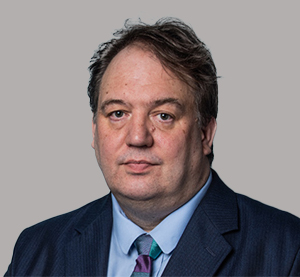
Peter has a busy and diverse practice consisting of serious criminal trial and appeal work, as well as high-profile public inquiries and inquests with an increasing volume of crime related civil proceedings. He is comfortable both with cases raising difficult legal, factual and evidential matters and is particularly interested in work raising psychiatric issues as he has sat as a Mental Health Review Tribunal Judge for over 20 years.
Between 2023 and 2026, Peter jointly led a team of two KC’s and five junior counsel in the Covid Inquiry, representing Northern Irish families (Northern Ireland Covid Bereaved Families for Justice - NICBFFJ) who suffered bereavements during the pandemic. During the Inquiry Peter questioned many of the scientists and UK and NI politicians at the heart of the response to the pandemic and made either opening or closing submissions on behalf of NICBFFJ in all modules in which he was instructed.
Peter has acted in the Hillsborough Inquests, in which he represented seven families whose members perished during the 1989 Hillsborough football stadium disaster. He led the questioning relating to the design of Hillsborough stadium, the decision to open the stadium gates, and the subsequent police cover-up on behalf of the 77 families represented by the Hillsborough Family Support Group. He has appeared as junior counsel for “Guiseppe” Conlon in the 1993 May Inquiry into the circumstances surrounding the convictions arising out of the 1974 bomb attacks in Guildford and Woolwich, in which he was falsely convicted alongside the “Maguire Seven” on fabricated explosives charges. Other inquests in which Peter has appeared have involved issues of the timely provision of medical assistance, deaths in prisons, psychiatric hospitals, and those in the context of police activity including shootings.
Peter’s criminal trial work continues to involve serious and complex crime of all types, including murder (whether planned, spontaneous, or domestic and including cases involving multifaceted scientific or evidential issues), serious sexual offences, organised crime and fraud.
Peter regularly appears in the Court of Appeal (Criminal Division) and has appeared in both the House of Lords and Supreme Court. He is regularly instructed in second opinion work particularly because of his enviably high rate of success in persuading the Criminal Cases Review Commission (CCRC) to refer cases back to the Court of Appeal and the Court of Appeal to quash those convictions. Notable examples include: Hallam (17-year old murder conviction quashed on non-disclosure of evidence basis - 2012); Nealon (attempted rape conviction quashed following new DNA evidence - 2014;Lalchan (conviction for stirring up racial hatred quashed because the prosecution failed to obtain the Attorney General's consent prior to initiating the proceedings, ruling that retroactive consent is invalid - 2022); Layden (initial quashing due to procedural delay in re-arraignment - 2023); as well as the well-publicised ongoing appeals of Danny Major and Kevin Nunn - see further details of these cases below under ’Criminal Appeals’.
"You could not have more courteous senior counsel. He is an excellent advocate and an extremely able lawyer. He is an absolute first-class KC and operates an outstanding service at all levels."— Chambers and Partners 2026
"He is very eminent. He is a star on every level, has a calm head and a brilliant mind. His tactical reasoning makes him stand out."—Chambers and Partners 2026
“Peter is lovely. He is a charming and consequently devastating advocate”— Chambers and Partners 2026
“He is a very clever lawyer, a fearsome cross-examiner and a marvellously persuasive advocate.”— The Legal 500 2026
“He has enormous intellect and strategic capacity, is committed to the best client care and has excellent advocacy skills."— Chambers and Partners 2026
“Peter leaves no stone unturned and has a wide knowledge of the law."— Chambers and Partners 2026
“Peter is incredibly smart, very patient and someone with a beautiful court presence." Chambers and Partners 2026
“A brilliant KC whom I would have no hesitation in instructing in the most serious cases. Peter is absolutely meticulous in his preparation and excellent in court. He also has fantastic client care skills and is happy to assist throughout the case."— Chambers and Partners 2026
“An outstanding silk who works tirelessly. He is incredibly good with clients who have mental health issues."— Chambers and Partners 2026
“Peter is a clever and hardworking lawyer. He can both do technical law and knock-about advocacy. Jurors like his easy warmth and judges trust and respect him. A real star of the Bar."—The Legal 500 2022
Covid-19 Inquiry (2023 to 2026): Represented Northern Ireland Covid bereaved Families for Justice in Modules dealing with Core UK decision-making and political governance (M2), Core NI decision-making and political governance (M2C), Impact of the pandemic of health systems (M3), Vaccines and therapeutics (M4), Procurement (M5), Care Sector (M6), Test trace & isolate (M7) and Impact on society (M10).
Re RD (2016): Represented parents of man shot by the police after armed stand-off.
Hillsborough (2013 – 2016): Represented seven families during the Hillsborough Inquests, in which the 96 people who died were found to have been unlawfully killed. Peter’s questioning at the inquest received widespread publicity. He led the families’ extensive enquiries on the topics of stadium safety, police failings in controlling the build-up of supporters, and police attempts to cover up the disaster.
This included questioning many of the senior officers involved in the disaster, including some of the match commanders; officers involved in the immediate police PR response to the disaster; Sir Norman Bettison, former Chief Constable of Merseyside police; junior police officers; and stadium engineers.
Wells (2010): Represented family of a patient detained under the Mental Health Acts in an Inquest investigating the circumstances of his death and how he was able to hang himself despite nominally being on five-minute observations. The jury returned a narrative verdict critical of the detaining authority.
Mola (2009): Represented family of a schizophrenic 23-year-old prisoner in an Inquest investigating the circumstances of his death and how he died of smoke inhalation after setting fire to cardboard furniture in his cell. The jury verdict was critical of decision by prison staff to allow him access to lighting materials given his previous history of starting fires both during previous prison sentences and outside. The inquest also covered prison service policy in relation to use of cardboard furniture and inaction in relation to implementation of cell rescue equipment.
Fearon (2006): Represented family of a man shot outside Turnmills nightclub in an Inquest raising issues of police response to information they had received in advance of the shootings. Jury found that that information was not “communicated effectively between the relevant parties”, and that better communication might “have led to a more proactive action plan”.
Member of 2010 Law Commission working party on Unfitness to plead—consultation paper No 197.
‘A timely reminder’, New Law Journal, 2008.
‘Fresh Evidence in Criminal Appeals—Pendleton revisited’, Archbold News, December 2006.
Article on the defence of provocation, Solicitors Journal, May 2006.
‘Criminal Justice Act 2003’, New Law Journal, 2004.
‘Fresh Evidence in the Court of Appeal; Pendleton—a Case Note’, New Law Journal, 2002.
‘Fitness to Plead Procedure: An adequate Protection?’, New Law Journal, 439.
‘Crime & Disorder Act’, LAG, January 1999.