

High Court holds claimants entitled to argue that Shell is responsible for all oil pollution in the Bille region of the Niger Delta
On 10 September 2026, Mrs Justice Lambert gave judgment in Alame and Others v Shell Plc and Others [2026] EWHC 2332 (KB). Lambert J held that the claimants are entitled to advance a claim in the upcoming trial in 2027 that Shell Plc and Shell Petroleum Development Company of Nigeria Ltd (together, ‘Shell’) are liable for all pollution in the Bille region of the Niger Delta, Nigeria, during the period relevant to the claims. Her Ladyship also granted permission for the claimants to seek aggravated damages in relation to Shell’s witnesses allegedly giving false and misleading evidence in Shell’s previous jurisdiction challenge.
The proceedings concern oil spills and pollution from Shell pipelines and infrastructure in the Niger Delta region of Nigeria between 2011 and 2013, and widespread environmental damage alleged to be caused by such spills. Multiple sets of proceedings were brought between 2015 and 2017 on behalf of communities affected in the Bille and Ogale areas of the Niger Delta. The first four years of litigation were taken up by Shell’s unsuccessful jurisdiction challenge, which the Supreme Court resolved in the claimants’ favour in Okpabi and Others v Royal Dutch Shell Plc and Another [2021] UKSC 3. The claims went back to the Court of Appeal in 2024, where the Court dismissed Shell’s argument that the claims should be tried as “global claims”; i.e. all or nothing claims, where the claims would fail if the claimants cannot prove that Shell was liable for all spills and causes of oil pollution in the region (Alame and Others v Shell Plc and Others [2024] EWCA Civ 1500).
Once those procedural challenges were out of the way, claims on behalf of individuals and representatives of the Bille community were selected to proceed as lead claims. The High Court made an order in 2025 requiring Shell to give disclosure, resulting in Shell providing the claimants with almost 300,000 documents by January 2026. Once disclosure had been provided, the claimants were required to give full particulars of their case on parent company liability, fault and causation. They did so in May, filing their Re-Re-Amended Particulars of Claim in the Bille Community Claim on 8 May 2026 (subsequently amended in June). The claim contains detailed allegations of systemic failures by Shell in the areas of leak detection, pipeline maintenance, pipeline security, and oil-spill containment and clean-up, and identifies 106 spills that occurred in the Bille region between 2011 and 2013.
At hearings before Lambert J on 14, 15 and 29 July 2026, Shell argued that the claimants should not be allowed to advance two parts of their claims in the 2027 trial:
- Shell argued that the claimants should only be allowed to advance claims in respect of the 106 identified spills and damage that can be traced back to those spills. This would prevent the claimants from advancing claims that Shell is liable for all oil pollution in the region even if it cannot be traced back to specific spills.
- Shell argued that the claimants’ claim for aggravated damages in respect of Shell witnesses allegedly giving false and misleading evidence in the jurisdiction challenge, among other allegations, should not be heard in the 2027 liability trial but at a later hearing.
The High Court rejected both arguments.
As to (1), Lambert J held that the Bille community is entitled to argue that Shell is responsible for all the oil pollution in the region, even if residents cannot precisely identify each and every individual spill resulting in the pollution. That means that if the claimants cannot attribute oil pollution and environmental damage in their region to any of the specific 106 identified spills, they are nonetheless permitted to rely on inferences that such damage must have been caused by unidentified spills for which Shell is responsible. Her Ladyship observed that the claimants had set out their case clearly and with particularity, and that it was not unarguable or bad in law. The High Court made it clear that these are not “all or nothing” claims or “global claims”. This decision will have implications for other environmental claims where it is difficult to identify every specific polluting event that results in damage.
As to (2), the High Court held that the issue of whether Shell witnesses knowingly gave false/misleading evidence and destroyed evidence should be dealt with now as it is potentially relevant to the credibility of the witnesses Shell was calling for the 2027 liability trial, and postponing the issue would cause further delay.
The claim will now proceed to trial, due to start on 4 May 2027.
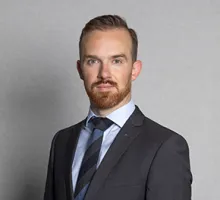
Joshua Jackson (together with Phillippa Kaufmann KC and Catherine Arnold of Matrix Chambers, Anneliese Day KC of Fountain Court Chambers and Abe Chauhan of Blackstone Chambers) acted for the claimants in the July hearing. A wider counsel team helped prepare the claimants’ pleadings, which also included Agata Patyna and Sarah Dobbie.
Josh is instructed by Leigh Day. The team is led by Daniel Leader and Matthew Renshaw.
Leigh Day’s press release can be found here.
The proceedings have recently been reported on by the BBC and the Financial Times, among others.