


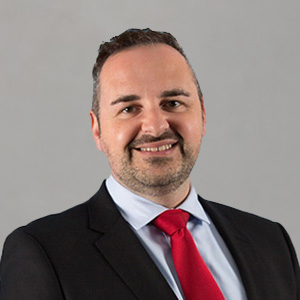
Oliver is a human rights lawyer focusing on healthcare law and disability rights
Oliver's public law practice includes judicial review, Human Rights Act claims, Court of Protection and inquests. He is on the Equality and Human Rights Commission’s panel of counsel and in 2022 was shortlisted for Legal Aid Barrister of the Year.
He deals with clinical negligence, discrimination and claims involving failures by organisations to provide adequate health and social care. He has conducted confidential independent investigations for healthcare entities and sits as an independent chair for NHS England's Independent Review Panels on NHS Continuing Healthcare.
He is instructed by “Covid-19 Bereaved Families for Justice” in the national Covid inquiry. In inquests, Oliver represents interested persons where the death touches on healthcare or disability:
"Very friendly and compassionate to clients, being approachable and understanding, which is so important in an inquest context; and a collaborative approach which means all issues are examined and resolved where possible." - Legal 500 2023
He is on top of the law and deploys that wealth of learning effectively in his written and oral submissions." - Chambers and Partners 2024
Appearing regularly in the Court of Protection, Oliver represents a range of local authorities, healthcare bodies, the Official Solicitor and family members. He has a special interest in autism and learning disability, especially where P is labelled as 'complex' and trust between families and public bodies has broken down. Oliver has represented restricted patients in the Mental Health Tribunal and has appeared in the Upper Tribunal. He is ranked in the directories as a leading practitioner in Court of Protection:
‘Oliver is highly approachable and incredibly passionate about the rights of individuals with disabilities. His drafting skills are excellent.’ - Legal 500 2024
"An excellent barrister who is very good at identifying novel arguments." - Chambers and Partners 2022
Oliver has an international practice in children's rights and disability rights. Oliver participated in the negotiation of the UN Convention on the Rights of Persons with Disabilities (CRPD) and has written widely on its implementation. He was based in Budapest for 15 years, including as Executive Director of Validity, an NGO working globally at the interface of human rights law and disability. As a result, he has unparalleled expertise at the UK Bar advising governments and civil society on law and policy reform to advance the rights of persons with disabilities. Recent assignments have been for UNDP, for an NGO in Georgia, for the government in Taiwan and for UNICEF in Viet Nam.
Oliver is the Chair of the Board of Trustees at Respond, a national charity that helps people with learning disabilities who have experienced trauma, and Chair of Bristol Law Centre.
Oliver is ranked as a leading junior in Legal 500 and Chambers & Partners in Court of Protection:
"He can cut through extensive correspondence to focus on the legal issues in dispute, whilst remaining sensitive to clients' needs." - Chambers and Partners 2023
"Oliver is good at cutting through complexity to get to the legal heart of the matter and good at truly understanding the complexity of the case. His advocacy is very clear, focused and extremely-well informed." - Legal 500 2023
"An excellent barrister who is very good at identifying novel arguments." - Chambers & Partners 2022
"He is incredibly approachable, very client-focused and able to grapple with complex issues." - Chambers & Partners 2022
“Oliver is committed to protecting the rights of vulnerable people and will always provide advice based on that objective. He is always prepared and provides in-depth advice considering a range of options.” - Legal 500 2021
Oliver has a busy Court of Protection practice across a range of complex cases involving residence, care, deprivation of liberty, contact, social media, sexual relations, international protection and cases that touch on the Human Rights Act. He acts for local authorities and other parties in applications under the inherent jurisdiction of the High Court, and in the Family Division National DOLS Court.
He is regularly instructed by the Official Solicitor and other litigation friends, as well as family members, local authorities, ICBs, NHS Trusts and other bodies.
He is often instructed in cases where relationships between public bodies and families have broken down or where P is described as 'complex'.
Oliver has a special interest in helping autistic people and people with learning disabilities detained for long periods under the MHA and has written on this subject. He practises across the four areas of law often required to assist such clients: mental capacity, mental health, community care and public law. An instructing solicitor commented, "he has been fab and extremely attentive and mindful of the client."
Oliver is regularly instructed in civil claims arising from unlawful deprivation of liberty and inappropriate treatment in healthcare and social care.
He accepts instructions in relation to the Mental Health Act 1983, including applications by detained patients in high secure hospitals to the First-tier Tribunal (Mental Health), appeals to the Upper Tribunal and applications to displace nearest relatives.
Oliver has extensive experience of strategic litigation, having spearheaded a series of successful test cases in the European Court of Human Rights from countries in central and eastern Europe, including Shtukaturov v. Russia (2008) and Stanev v. Bulgaria (2012), both cited by the UK Supreme Court.
He is Chair of the national charity Respond, which provides psychotherapy to autistic people and people with learning disabilities who have experienced trauma.
Among Oliver’s recent cases including the following:
Cheshire West and Chester Council v (1) XTC by her ALR (2) HTC HHJ Burrows in Manchester. Oliver represents P in CoP and inherent jurisdiction proceedings involving an older married couple.
Sunderland City Council v Lioubov Macpherson [2023] EWCOP 3, Poole J in Newcastle. Oliver represented the defendant in a committal hearing for contempt of court.
An ICB v (1) RN (by her ALR) and (2) TN [2022] EWCOP 41. Oliver represented P in a Covid vaccination case in which there was a subsequent appeal before Hayden J at [2022] EWCOP 53
Re PH, HHJ Rogers in Lincoln, December 2021. Oliver represented P, a young woman with learning disabilities, and successfully argued she should receive Covid vaccinations and not visit her unvaccinated mother at Christmas. Reported by the Open Justice Project.
PH & RH v (1) Brighton and Hove City Council (2) Tony Hickmott by his litigation friend, the Official Solicitor) & Ors, HHJ Hilder in London, Aswini Weereratne QC and Oliver represent the parents of Tony Hickmott who has spent 21 years detained in an 'assessment and treatment unit' under the MHA, eight of which he has been fit for discharge but the local authority and CCG have not identified a discharge destination. Two years after the application was made, on the parents' request, the judge in November 2021 listed monthly hearings to oversee the discharge. The BBC and Sky made an application to lift the reporting restriction, which was granted: PH & Anor v Brighton And Hove City Council [2021] EWCOP 63. News item here.
Re X, HHJ Owens in Oxford, December 2020. Oliver represented the parents of X, a young woman with brain injury, who wanted to move from a care home to live at home with 2:1 care, which was resisted by the local authority. After a 2-day best interests hearing, the judge agreed with the parents.
A County Council v LW & Ors, HHJ Rowland sitting as a Deputy High Court Judge in Birmingham, December 2020. Oliver represented the local authority in a 2-day fact-finding hearing. The court found P's son controlled and coerced P, and made the injunctions sought.
DP v LB Hillingdon [2020] EWCOP 45. Hayden J. This case clarified the approach the court should take to interim declarations under s.48 in respect of s.21A MCA applications. Oliver represented DP and was led by Victoria Butler-Cole KC. This was the first reported case bought by an Accredited Legal Representative.
Cornwall Council v NP and BKP [2020] EWCOP 44. DJ Taylor in Truro. Oliver represented an older man NP, by his litigation friend, the Official Solicitor. Citing the UN-CRPD, the judge decided that it was in NP’s best interests to return home after a period in a rehabilitation unit.
QJ v A Local authority & Anor [2020] EWCOP 3 and [2020] EWCOP 7. Oliver represented the litigation friend of an 87-year-old man with dementia who had been interviewed by police in relation to historic child sex offences and had then stopped eating in his care home. Hayden J found that QJ had capacity to make decisions about nutrition and hydration. Press report here.
CB (by her litigation friend, the Official Solicitor) v Medway Borough Council and Anor (Appeal) [2019] EWCOP 5: Oliver represented P, a 91-year-old woman who was deprived of her liberty in a care home. In this unusual appeal, Hayden J held that the Court of Protection should never summarily dismiss s.21A applications.
JS v South London and Maudsley NHS Foundation Trust and the Secretary of State for Justice [2019] UKUT 172 (AAC), [2020] AACR 1, Oliver represented the appellant in an Upper Tribunal case that clarified the circumstances in which the Mental Health Tribunal should accept a reinstatement of a patient's previously-withdrawn application.
Walsall Metropolitan Borough Council v (a) Julie X (2) Jeremy X (3) Bethany X (a minor acting via her guardian), Keehan J in the High Court (Family Division). Led by Victoria Butler-Cole KC, it was argued that the local authority should not attempt to injunct the father of a 17-year-old girl who had lived in a hospital seclusion room for nearly 2 years. Press coverage here. Oliver was instructed in the follow-up judicial review that led to a public apology and settlement.
RH v (1) Secretary of State for Work and Pensions and (2) Medway Borough Council (DLA) [2018] UKUT 48 (AAC). Oliver represented the local authority in an Upper Tribunal social security appeal raising raised human rights points.
Milton Keynes Council v (1) PS (by her litigation friend, the Official Solicitor) (2) RS. HHJ Hildyard QC in Luton. Oliver represented the husband of P who been removed from the marital home by the local authority because of bruises. Following a fact-finding hearing, the court declined to make any findings of fact against the husband and decided it was in P’s best interests to return home.
Oliver accepts instructions in complex inquests that touch on health, in particular mental health or learning disability, including Article 2 and jury inquests. In the national Covid Inquiry, Oliver represents the Covid-19 Bereaved Families for Justice.
Inquest into the death of Matthew Caseby, Birmingham Coroner's Court, Article 2 with a jury over 2 weeks in April 2022. Narrative conclusion critical of the Priory Woodbourne Hospital whose neglect contributed to Matthew's death. PFD reports to the Secretary of State for Health and Social Care as well as to the Priory Group. News item here.
Inquest into death of Aaron Clamp, Reading Coroner's Court, Article 2 with a jury, February 2022. Narrative conclusion that Chris died while on 1-to-1 observation in long-term segregation in Broadmoor Hospital, and that there was "a serious failure in the timely manner to recognise and reduce the level of risk and a serious failure to recognise and execute the steps" to reduce the risk. News item here.
Inquest into the death of RM, Gateshead Coroner's Court, March 2022. Narrative conclusion critical of community mental health services to a young woman in mental health crisis.
Inquest into death of Manon Jones, Pontipridd Coroner's Court, January 2022. Critical narrative conclusion in an Article 2 case that 16-year-old Manon Jones died in a CAMHS unit on 15-minute observations when she "ought to have been on 1:1 observation levels pending a further assessment”. News item here.
Inquest into the death of John Ashley, West Sussex Coroner’s Court, December 2019. Oliver represented the sister of a man with longstanding mental health issues. The Coroner found that he died by suicide contributed to by the neglect of the local mental health Trust. Press report here.
Inquest into the death of Molly Frank, St Pancras Coroner’s Court, April 2019, Oliver represented the family of a care worker who was likely struck on the head by the 95-year old service user she was caring for. The jury found she died due to natural causes. Press report here.
Inquest into the death of PC, West London Coroner’s Court, October 2018, Article 2 inquest before a jury. Jury found suicide contributed to by neglect of an NHS Trust and a GP, due to lack of discharge planning and communication. Coroner issued a PFD report.
At the international level Oliver oversaw a third party intervention in Centre for Legal Resources v. Romania (2014), a case brought by a Romanian NGO in the European Court of Human Rights. This is a leading case on the right to life under Article 2 of the ECHR and access to justice for people with mental disabilities. The Court found that an NGO could pursue an application on behalf of a man who died in a psychiatric hospital and had no next of kin.
Oliver regularly advises on health and social care provision and accepts instructions in clinical negligence cases across the range of medical specialisms.
His niche practice is in relation to HRA and negligence claims about the care and treatment of people with mental health issues, learning disabilities and/or autism in schools, prisons, psychiatric hospitals, care homes and the community.
He has conducted confidential independent investigations for health and social care entities. Supplementing his legal analysis, he has a Master of Public Administration (MPA) and draws on his experience as a charity CEO for over a decade and his experience as a trustee. He therefore understands governance, human resources, communications and management problems in organisations.
Oliver has a strong health-related inquest practice, as well as a Court of Protection and mental health law practice, including medical treatment cases. He has a part-time role as Chair of Independent Review Panels in relation to NHS Continuing Healthcare.
Oliver is regularly instructed to advise on judicial reviews, including those related to provision of healthcare and social care and compliance with the Equality Act 2010. Through drafting Letters Before Claim, Oliver has successfully reversed several case management decisions by Coroners. During the Covid-19 pandemic he has been instructed to challenge restrictive visits policies of NHS Trusts and care home providers. He is also instructed by the Covid-19 Bereaved Families for Justice, a group calling for a statutory inquiry into the UK government’s response.
Oliver has worked in international disability and mental health law and policy since 2001 and is recognised as a leading expert. He has particular expertise with the UN Convention on the Rights of Persons with Disabilities (CRPD), having participated in its negotiation in 2006. Oliver has carried out human rights monitoring and delivered training in over twenty countries in Europe, Africa, Asia and Latin America.
Oliver accepts instructions for advisory work, research, training and representation on all matters of disability and mental health law. His clients have included governments, the judiciary, NGOs, philanthropic organisations, corporations and UN bodies.
Oliver has litigated, trained and written about children’s rights, mental health law, monitoring closed institutions (psychiatric hospitals, social care institutions, children’s homes), equality and non-discrimination, community living, guardianship and legal capacity, political participation, access to justice. He has a particular interest in preventing and litigating ill-treatment, including sexual violence, psychiatric coercion and conditions of detention.
In 2021, Oliver was the lead author on UNDP's "Political Participation of Persons with Intellectual or Psychosocial Disabilities". In 2022, he trained judges in Georgia on disability law, and was one of five global experts appointed to assess CRPD implementation in Taiwan. In 2023, he wrote a report on children with disabilities for UNICEF Viet Nam and a report about deaf drivers for UNDP Georgia. His ongoing work includes supporting the judiciary in Taiwan to develop a mental health tribunal system. He is on UNDP's panel of experts on mental healthcare, and on the OSCE panel of experts on political participation of persons with disabilities.
After finishing pupillage in 2001, Oliver was appointed Legal Director of the international legal advocacy NGO Validity (formerly the Mental Disability Advocacy Centre), and in 2006 became its Executive Director, a position he held until 2017 when he returned to the UK Bar.
In 2006 he co-authored the book “Mental Disability and the European Convention on Human Rights”. Oliver participated in the drafting of the UN Convention on the Rights of Persons with Disabilities (CRPD), and has written extensively on its implementation, including:
“Supranational Human Rights Bodies and Protecting the Rights of People With Disabilities in the COVID-19 Pandemic” in the European Human Rights Law Review in 2020;
with Soumitra Pathare “Chronic illness, disability and mental health” in Foundations of Global Health and Human Rights, edited by Benjamin Meier and Lawrence Gostin, OUP 2020; and
with Genevra Richardson "The right to live independently and be included in the community", International Journal of Law and Psychiatry, Vol 69, March-April 2020.
At MDAC Oliver oversaw the world’s largest multi-country docket of disability rights test cases. Under his leadership MDAC represented applicants or acted as amicus curiae in cases before the European Court of Human Rights,
Gajcsi v. Hungary, 2006: fresh evidence needed for mental health detention
Shtukaturov v. Russia, 2008: guardianship cannot be used as a backdoor to psychiatric detention
Alajos Kiss v. Hungary, 2010: legal capacity and the right to vote
Stanev v. Bulgaria, 2012: social care detention and degrading conditions
Bures v. Czech Republic, 2012: physical restraint
Sykora v. Czech Republic, 2012: detention and guardianship
ZH v Hungary, 2013: reasonable accommodations to a disabled prisoner
Lashin v. Russia, 2013: right of person under guardianship to marry
Mikhailenko v. Ukraine, 2013: guardianship
Centre for Legal Resources on behalf of Valentin Campianu v. Romania, 2014: right to life, standing of NGOs to represent a deceased person
Stankov v. Bulgaria, 2015: guardianship and social care detention
Blokhin v. Russia, 2016: unlawful detention in prison and abuse of boy with disabilities
Kocherov and Sergeyeva v. Russia, 2016: disability and parenting
Cervenka v. Czech Republic, 2016: detention and guardianship
Usmanov v. Russia, 2016: conditions of psychiatric detention
MDAC achieved numerous successes in constitutional courts and other domestic proceedings, including in Bulgaria, the Czech Republic, Russia and Slovakia. Working in partnership with the Bulgarian Helsinki Committee, Oliver initiated the first case in central and eastern Europe concerning disability discrimination in the provision of education (MDAC v. Bulgaria, 2008, European Committee of Social Rights). This case helped to ensure that abusive children’s institutions in Bulgaria were closed down.
Oliver has experience of advocacy before several human rights bodies, including the UN Human Rights Committee, the UN Committee against Torture, the UN Subcommittee for the Prevention of Torture, the UN Committee on the Rights of the Child and the UN Committee on the Rights of Persons with Disabilities. He has advised UN Special Rapporteurs and he has worked on projects with OHCHR, UNDP, UNICEF and the WHO.
In Europe, Oliver has conducted advocacy at the European Commission, the European Parliament, the Council of Europe’s Parliamentary Assembly, the Committee for the Prevention of Torture and the Commissioner for Human Rights. In 2011, he led a successful international campaign that resulted in the Venice Commission reversing its previous position that recommended governments deny the right to vote from people under guardianship.
For a full list of Oliver’s publications, see ResearchGate. Oliver blogs here. Recent publications include:
Oliver Lewis (2020) “Supranational Human Rights Bodies and Protecting the Rights of People With Disabilities in the COVID-19 Pandemic”, European Human Rights Law Review, September
Oliver Lewis and Soumitra Pathare (2020) “Chronic illness, disability and mental health” in Foundations of Global Health and Human Rights, Benjamin Meier and Lawrence Gostin (eds), OUP
Oliver Lewis and Genevra Richardson (2020) The right to live independently and be included in the community, International Journal of Law and Psychiatry, Vol 69, March-April 2020
Oliver Lewis (2018) “Council of Europe” in Lisa Waddington and Anna Lawson (eds) The UN Convention on the Rights of Persons with Disabilities in Practice, OUP
Ann Campbell and Oliver Lewis, “Violence and abuse against people with disabilities: A comparison of the approaches of the European Court of Human Rights and the United Nations Committee on the Rights of Persons with Disabilities”, International Journal of Law and Psychiatry, Volume 53, July–August 2017, Pages 45-58
Felicity Callard and Oliver Lewis (2017) “The World Psychiatric Association’s “Bill of Rights”: A curious contribution to human rights”, International Journal of Mental Health, 46:3, 157-167